Menu

Call Us This Wednesday to Get $15 Off
Trusted Septic Services in Central Florida Call This Wednesday to Get $15 Off
Call Us This Wednesday to Get $15 Off
Trusted Septic Services in Central Florida Call This Wednesday to Get $15 Off
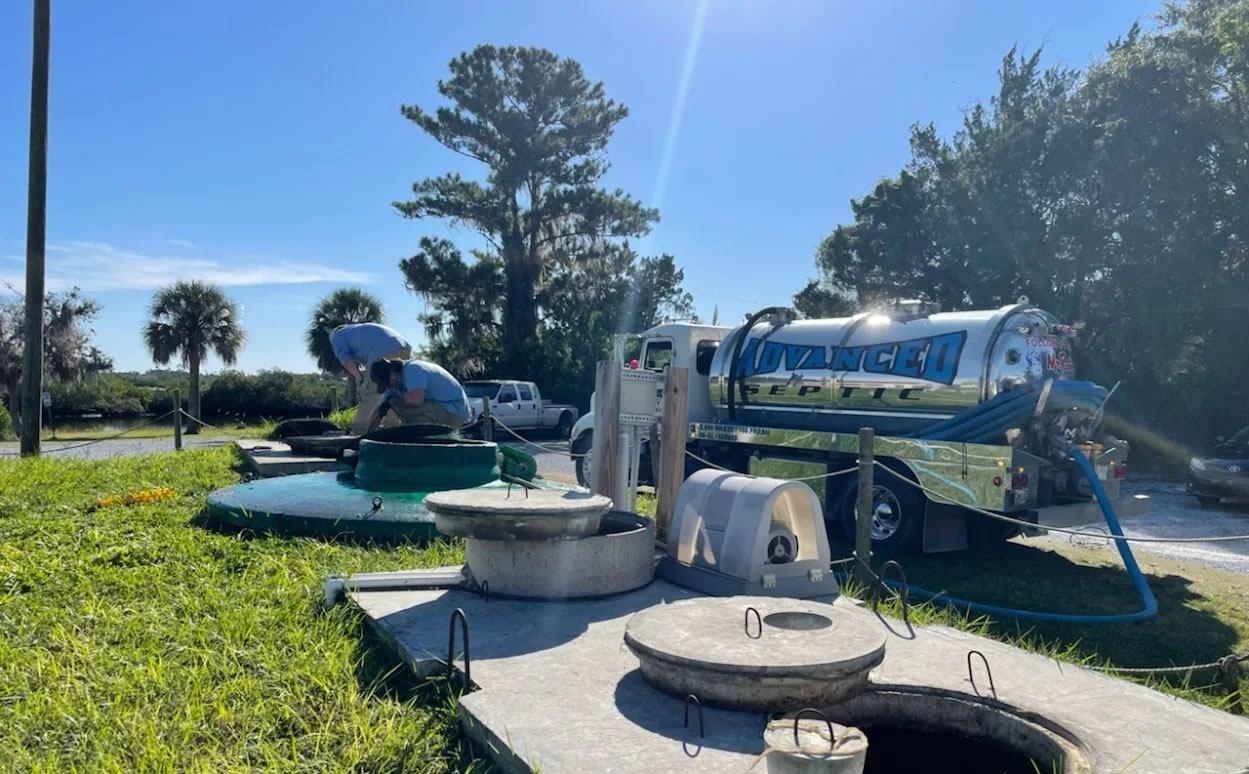
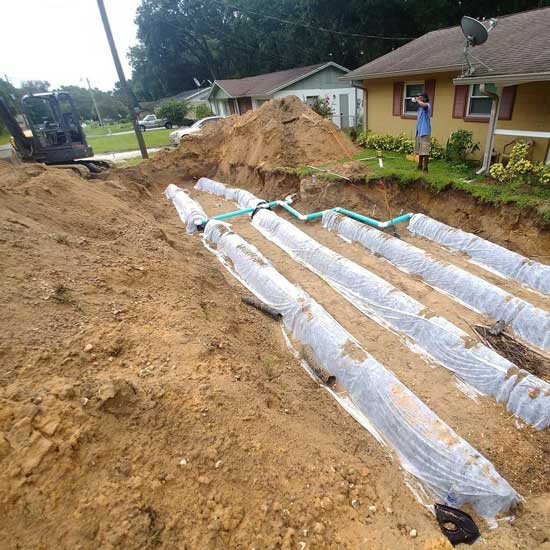
When a drain field starts failing, the signs are hard to miss. What's less obvious is whether what you're dealing with calls for a repair or if the entire system needs to come out and start over. At Advanced Septic, drain field repair vs. replacement is a conversation we have with homeowners regularly. Read more, and we'll break down how drain fields fail, what each option actually involves, and how to make the call that makes the most sense for your property and budget.
Your drain field is a network of perforated pipes buried in gravel-filled trenches. Wastewater flows from your septic tank into those pipes, then disperses into the surrounding soil, which filters it naturally. The system depends on that soil staying permeable. When it can't absorb liquid anymore, the whole process backs up.
The most common causes of drain field failure include biomat buildup, compaction, and hydraulic overload. Biomat is a layer of organic material that accumulates at the soil surface when too much wastewater moves through the system too fast. It can seal the soil and block absorption. Compaction happens when vehicles or heavy equipment drive over the drain field and crush the pipes or collapse the gravel bed. Hydraulic overload occurs when the system receives more water than it is designed to handle.
Age is a factor, too. Most drain fields have a functional lifespan of 20 to 30 years. Systems at or past that point may fail not from a single cause but from cumulative wear. Knowing what triggered the failure is the first step toward figuring out what to do about it.
Not all drain field damage looks the same, and the type of damage is what largely determines your options. A cracked or collapsed pipe is mechanical damage. A saturated, biomat-clogged soil layer is biological. Compacted or clay-heavy soil that never drains well is geological. Each category has different repair implications.
Mechanical damage like broken pipes, crushed laterals, or disconnected fittings is the most repair-friendly scenario. A septic company in Belleview, FL can excavate the affected section, replace the damaged components, and restore function without touching the rest of the system. Biological failure is trickier. Biomat can sometimes be treated with aeration or bacterial additives, but if it's advanced enough, the soil may need to be replaced.
Geological issues present the biggest challenge. If your soil doesn't perc, meaning it doesn't absorb water at an acceptable rate, no amount of pipe work fixes that. A failing drain field in dense clay or high water table conditions points toward replacement and possibly a system redesign.
Repair is viable when the damage is confined to a specific zone and the surrounding system is still structurally sound. If a single lateral line has collapsed, drain field line replacement for that section is a targeted fix. The rest of the system continues working, and the disruption to your yard stays minimal. A few conditions that support repair over replacement:
Repairs also make financial sense when the cost comes in well below the replacement threshold. Drain field line replacement for one or two laterals is a lot less than a full system replacement. A qualified technician from any reputable septic service should be able to scope the damage and give you a clear cost comparison before work begins.
Some situations don't leave room for a partial fix. If the biomat has spread across the entire drain field, repairing individual lines won't restore absorption. If multiple laterals have collapsed and the gravel bed is saturated, excavating the whole field and starting over is more cost-effective than piecemeal repairs that fail within a few years.
Full replacement also becomes necessary when your existing system no longer meets current code requirements. Regulations around setback distances, field size, and soil evaluation standards have tightened in many jurisdictions. A system installed 25 years ago may have been legal then, but won't pass inspection today. Any permitted replacement triggers compliance with current standards, which may mean redesigning the system layout entirely.
Repeated failures are another clear indicator. If your system has needed repairs two or three times in a short window, you're patching something that's fundamentally compromised. At that point, a septic company will typically recommend replacement as the more cost-effective long-term decision.
Full drain field replacement starts with a site evaluation, including soil testing and a percolation test to confirm the new field location can handle the load. Once a design is approved and permits are pulled, excavation begins. The old pipes, gravel, and in some cases the biomat-contaminated soil all come out. New perforated pipes go in on a fresh gravel bed, graded to distribute wastewater evenly across the field.
The system connects back to your existing septic tank, assuming the tank passes inspection. If it doesn't, tank replacement may happen simultaneously. From permit approval to completed installation, most residential replacements take two to five days of active work, though permit timelines vary by county.
Expect the yard to look rough when the crew wraps up. The disturbed area needs time to settle and re-establish ground cover. Most contractors recommend seeding with grass rather than replanting shrubs or installing hardscape, since root intrusion into drain field pipes is a documented cause of future failures.
Whether you've repaired a section or replaced the whole system, what you do next determines how long it lasts. The most damaging thing most homeowners do is overload the system with water. Spreading laundry loads across multiple days, fixing leaky fixtures, and avoiding back-to-back showers all reduce the hydraulic load on the field.
Pumping your septic tank every three to five years keeps solids from pushing into the drain field. Once solids enter the laterals, they clog the gravel bed and accelerate biomat development. That's a direct path back to failure. Working with a septic service to maintain a regular pumping schedule is one of the most effective things you can do to protect your investment.
Keep vehicles, heavy equipment, and deep-rooted plantings off the drain field. Mark the boundaries clearly so landscapers and contractors don't accidentally drive over them. Skipping these precautions shortens the life of even a brand-new system.
If your drain field is showing signs of failure, the worst move is waiting to see if it resolves on its own. A proper inspection identifies if you're dealing with a repair or a replacement. Contact Advanced Septic to schedule a drain field evaluation and get answers about what your system needs.
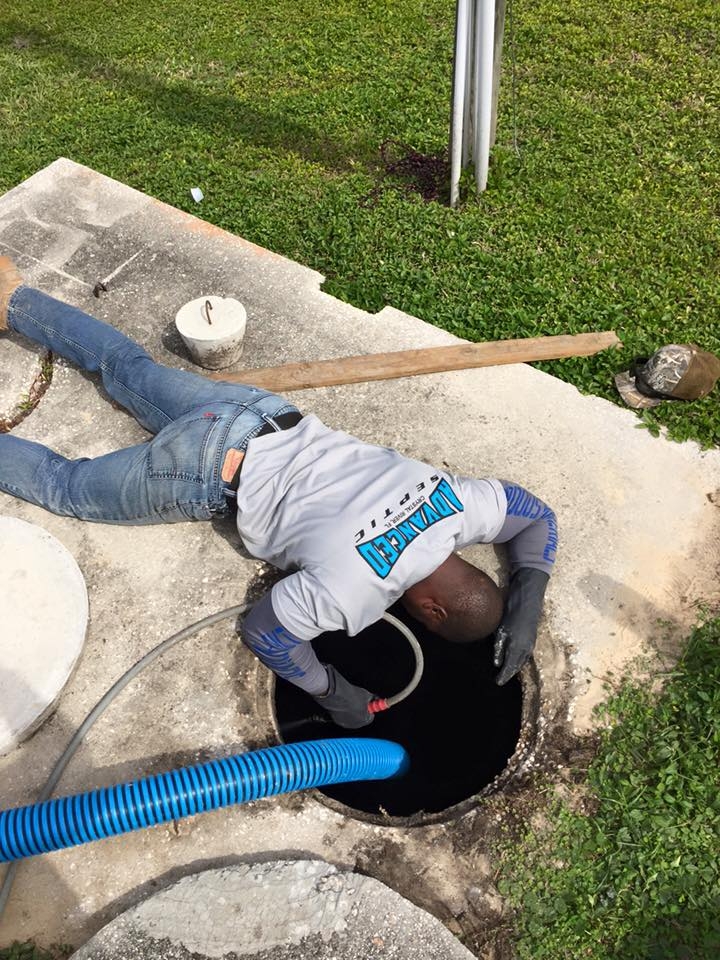
When was the last time you thought about your septic system? Many homeowners' response would most probably be "never" until there…
Read More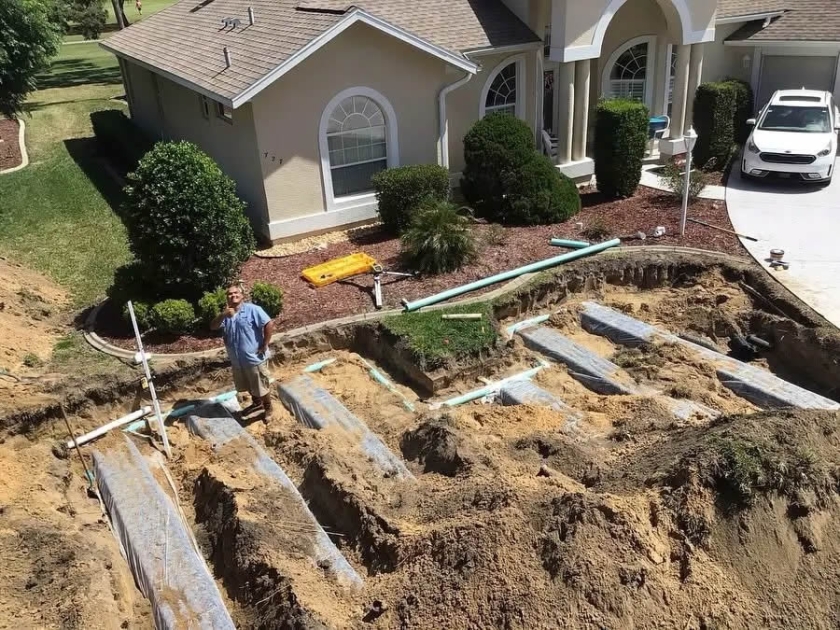
Septic systems play a crucial role in managing wastewater from homes and businesses without a municipal sewer system. When functioning properly,…
Read More
As a homeowner, keeping your wastewater treatment system in good working order is essential in maintaining comfort, safety, and functionality. According…
Read More
Nothing is more frustrating than a toilet gurgling and backing up when you flush. In severe cases, wastewater can flood your…
Read More
As a homeowner, dealing with septic backups is not just a nuisance but a sign that your system needs attention. With…
Read More