Menu

Call Us This Wednesday to Get $15 Off
Trusted Septic Services in Central Florida Call This Wednesday to Get $15 Off
Call Us This Wednesday to Get $15 Off
Trusted Septic Services in Central Florida Call This Wednesday to Get $15 Off
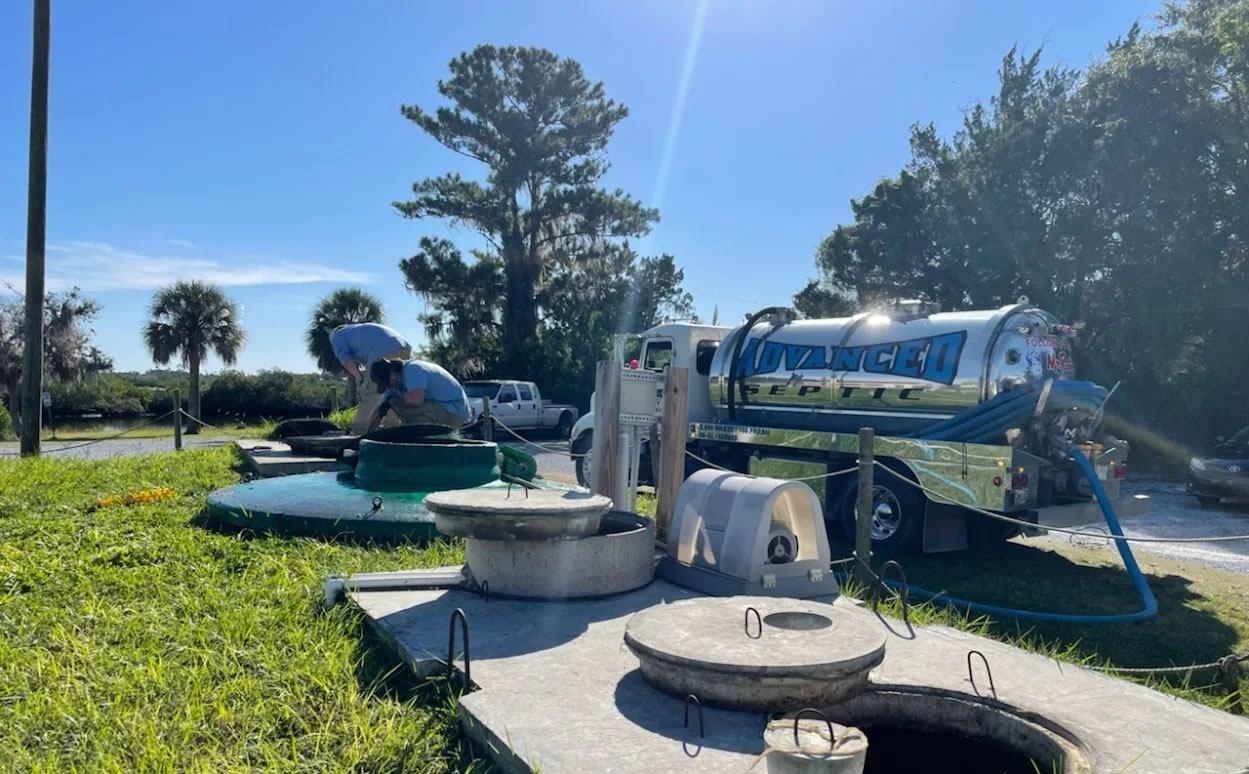
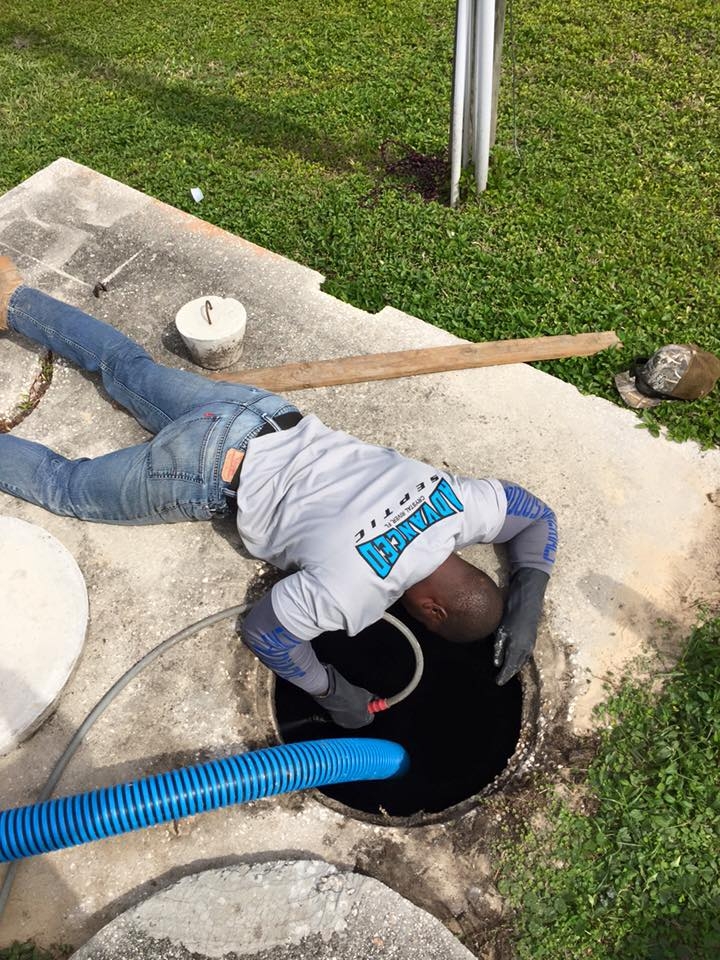
Septic tank maintenance is a responsibility that's easy to put off because the system is underground and out of sight. But skipping or stretching your pumping schedule is one of the fastest ways to turn a routine service call into a full system emergency. At Advanced Septic, we get asked how often you should pump your septic tank more than just about any other question. Keep reading, and we'll walk you through the factors that determine your pumping schedule and how to build a maintenance routine that protects your system for the long haul.
Your septic tank is a buried, watertight container that receives all of the wastewater from your home. Solids sink to the bottom and form sludge. Grease and lighter materials float to the top as scum. The liquid in the middle flows out to your drain field, where the soil filters it naturally.
The problem is that sludge and scum don't go anywhere on their own. They accumulate with every flush, every shower, and every load of laundry. Bacteria in the tank break down some of that material, but not all of it. Eventually, the solid layers grow thicker until they crowd out the liquid zone and start pushing unprocessed waste into the drain field.
Once solids reach the drain field, the damage is expensive and sometimes irreversible. Drain field restoration or replacement can run anywhere from $5,000 to $20,000 or more. Septic tank pumping in Wildwood, FL prevents the outcome by removing the accumulated solids before they reach a critical level.
You've probably heard the rule that you should pump your septic tank every three to five years. That's a reasonable starting point, but it's built on assumptions that don't fit every household. It assumes an average-sized tank, average water use, and a household of about four people.
A family of six using a 1,000-gallon tank will fill their tank much faster than a single person with a 1,500-gallon system. Applying the same three-to-five-year rule to both situations means one household is pumping too late and the other is spending money unnecessarily. Neither outcome is ideal.
The accurate pumping interval for your home depends on tank size, household size, water consumption, and whether you use a garbage disposal. A qualified septic company can review your system specs and usage patterns to give you a schedule based on accurate data.
The EPA estimates that the average American uses about 70 gallons of water per day. Multiply that by the number of people in your home, and you get a clearer picture of the daily load entering your tank. A household of two generates roughly 140 gallons of wastewater per day. A household of six produces closer to 420 gallons, three times the volume.
Long showers, multiple laundry loads per day, running the dishwasher twice, and heavy garbage disposal use all accelerate sludge accumulation. A garbage disposal alone can increase the solid load in your tank by 50 percent, which is a big difference when you're trying to extend the time between pump-outs.
Households with high water usage or large families should plan on septic tank pumping every two to three years rather than waiting for the five-year mark. If you've added people to your household since your last service, adjust your schedule accordingly. The tank doesn't know you had a baby or took in a relative, but the sludge layer does.
When a tank goes too long without pumping, the sludge layer rises until it blocks the outlet baffle, the component that allows liquid to exit toward the drain field. At that point, solids begin flowing out with the effluent. Those solids clog the soil in the drain field and kill the bacterial activity that makes natural filtration possible.
The warning signs appear in a specific order. First, drains throughout the house slow down. Then the toilets start to back up or gurgle. Wet spots or unusually lush grass appear above the drain field. Eventually, sewage surfaces in the yard or backs up into the home. By the time you see those signs, the tank has already been overloaded for some time.
Repairs at this stage go beyond routine septic service. You're looking at potential drain field replacement, soil remediation, and in some cases, a completely new system. The cost difference between preventive pumping and drain field replacement is not minor.
Start with documentation. If you don't have records of your last pump-out, check with the previous homeowner or contact your local health department. Many counties keep records of permitted septic service calls. If no records exist, schedule an inspection so a technician can measure your current sludge and scum levels and estimate when the tank was last serviced. Once you have a baseline, you can build your schedule around your tank size and household. Use this as a starting framework:
Set a calendar reminder a few months before your next scheduled service, so you have time to book without rushing. Keep a simple log with the service date, the technician's notes, and observations about sludge depth. The record becomes useful if you sell the home or if an issue develops later.
A reputable septic company will measure your sludge and scum layers at every visit and tell you whether your interval is accurate or needs adjustment. If a technician can't give you those measurements, ask for them. The data is the only reliable way to confirm your tank is being pumped at the right time.
Your septic system will work reliably for decades with consistent maintenance. The single most important thing you can do is pump on a schedule that fits your household. If you're not sure when your tank was last serviced, or if you want a technician to check your current sludge levels and set an accurate maintenance interval, contact Advanced Septic to schedule a service call.
When was the last time you thought about your septic system? Many homeowners' response would most probably be "never" until there…
Read More
Septic systems play a crucial role in managing wastewater from homes and businesses without a municipal sewer system. When functioning properly,…
Read More
As a homeowner, keeping your wastewater treatment system in good working order is essential in maintaining comfort, safety, and functionality. According…
Read More
Nothing is more frustrating than a toilet gurgling and backing up when you flush. In severe cases, wastewater can flood your…
Read More
As a homeowner, dealing with septic backups is not just a nuisance but a sign that your system needs attention. With…
Read More